Halo: Combat Evolved
ASCENSIONREVIEW
Drez
1/6/2026
The World Wears Its Myth Like Armor
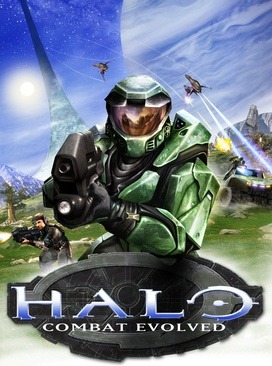
Booting up Halo: Combat Evolved in 2026 feels like dusting off an old vinyl only to realize the grooves still cut deeper than half the digital garbage shoved at you today. This isn’t nostalgia goggles lying to you, it’s a reminder that Bungie didn’t just make a shooter, they rewired the entire genre. Back then, Master Chief didn’t need a TikTok campaign or a cross brand soda can to convince you he was the coolest bastard in the room. You picked up that controller, you hit the beach on Silent Cartographer, and you just knew. It didn’t run well on the old Xbox, the thing coughed like a middle-aged smoker trying to jog. The framerate was a dare, not a guarantee. But none of that mattered. I was a kid staring at the future, and the future was a Spartan in green armor putting a bullet in every alien skull dumb enough to get between me and the next checkpoint.
The story in Halo isn’t Shakespeare, but it doesn’t need to be. It’s pulp sci fi in military fatigues, and that’s exactly why it works. You’ve got ringworlds, religious zealot aliens, and a cyborg protagonist who speaks in sentences as efficient as the assault rifle he’s carrying. The Chief is a bad motherf****r not because he’s written with nuance but because Bungie knew when to shut up and let the suit, the gun, and the silence do the heavy lifting. Cortana plays the counterpoint, and thank God for it, without her sarcasm and snark, the campaign would read like a Marine recruitment video with better lighting. The Covenant are Saturday morning cartoon villains with enough menace to keep you pushing forward. Now the Flood? They’re nightmare fuel, the pivot point where the game stops being a slick military shooter and starts whispering survival horror in your ear. That switch up still lands. The lore’s messy if you peel too hard, but back then you didn’t. You absorbed what you could, filled in the blanks with imagination, and marched on. The point wasn’t airtight narrative, it was atmosphere. Bungie built a world that felt alive, mysterious, and just out of reach. You wanted more, and they knew it.

92
File: Q4R-26-00011-S92-EXA
The Gunfights That Wrote the Rulebook
Some missions drag, corridors repeat like someone copy pasted chunks of geometry and hoped no one would notice, and the back half of the campaign leans too hard on backtracking. But even when the wallpaper repeats, the gunfights make you forget. The shooting feels crisp in a way most modern FPS games still chase. Every weapon has character. The pistol is a hand cannon pretending it belongs in a western. The shotgun is intimacy at its most violent. The plasma rifle hums like a death sentence. Bungie understood what too many studios forget, guns aren’t just tools, they’re personalities. Enemy AI wasn’t perfect, but for 2001 it was borderline witchcraft. Grunts panicked when you stuck their friends with plasma grenades. Elites strafed and ducked with unnerving precision. Jackals were annoying, but in that “throw the controller and immediately pick it back up” kind of way. Combat had rhythm. It wasn’t about mowing down bullet sponges, it was about outmaneuvering enemies who seemed alive enough to make your victories satisfying.
Charm Wrapped in Pixels and Choirs
Visually, Combat Evolved hasn’t aged with grace, but it hasn’t aged with embarrassment either. The ringworld still inspires awe the first time it curves into the horizon, and that’s not nostalgia talking. It’s design. Clean, bold, and big enough to make your living room feel small. Sure, textures look like someone smeared paint with a stick in places, and character models wear expressions that scream “beta test,” but the atmosphere carries it. The audio, though, that’s eternal. Marty O’Donnell’s score doesn’t just elevate Halo, it canonizes it. Gregorian chants, pounding drums, eerie ambience, it’s the sound of sci fi finding its voice. The guns all bark and boom with weight. The voice acting? Serviceable, with a few gems, but nobody’s quoting Captain Keyes at dinner. Still, Chief’s gravelly one liners hit like sledgehammers because they’re scarce. Less is more, and Halo proved it.
Drez
The Revolution That Stuck
Before Halo, console shooters were a joke. Clunky, imprecise, doomed to live in the shadow of PC stalwarts. Bungie burned that notion to ash. They nailed twin stick controls, balance, pacing, and multiplayer that turned dorm rooms into battlegrounds. You don’t get Call of Duty 4, Destiny, or even Fortnite as we know it without Combat Evolved kicking the door down first. It didn’t just influence shooters, it redrew the blueprint for blockbuster gaming. Campaigns that felt cinematic without being cutscene heavy. Multiplayer that sold consoles. A protagonist designed to be iconic without saying much of anything. Halo wasn’t just a game, it was a seismic event. Of course, not every part of its legacy is pretty. The industry learned the wrong lessons in places, endless sequels, bloated lore, the fetishization of military sci fi. But strip away the baggage, go back to Combat Evolved itself, and it still feels like lightning in a bottle.
Closing the Loop on the Ring
Playing Halo: Combat Evolved today isn’t about graphics or polish. It’s about history written in bullets and plasma fire. It’s about remembering when shooters grew up overnight. Bungie didn’t just make a good game; they made the game that every other FPS has to measure itself against, even if most come up short. Sure, the level design stumbles, and yes, the original Xbox sometimes felt like it might explode under the strain. But the charm, the atmosphere, the way it reshaped how games were built, that hasn’t faded. You don’t just play Halo to kill time. You play it to understand where FPS gaming turned the corner and started sprinting. Master Chief is still standing there, visor gleaming, rifle ready, daring you to step up. And if you care about video games at all, you owe it to yourself to answer.